
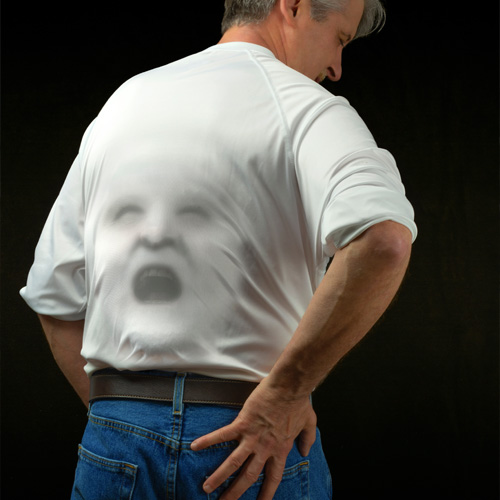
Back Pain vs. Sciatica: Exploring the Distinction
If you’re dealing with pain in your back lower extremities, you may have been told you’re suffering from sciatica. But are you really?
People often conflate lower back pain and sciatica, and if you’re in intense pain, you probably don’t care much about what it’s called–you just want relief! But in reality, understanding the type of pain and why you’re experiencing it is crucial in finding a lasting, long-term solution.
Today, we want to share two Advance Physical & Aquatic Therapy patient stories with you. One patient (we’ll call him Frank) suffered from sciatica. Another patient (we’ll call her Laura) had back pain. By looking at these two stories, we hope you can better understand why distinguishing between back pain and sciatica is so important.
Frank’s Story: A True Case of Sciatica
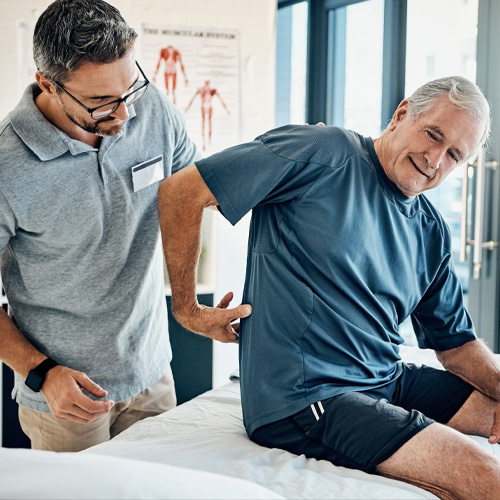
Frank visited us because his pain was unbearable. He was experiencing it throughout the lower half of his body: in his lower back, through his buttocks, and all the way down to his foot. But it wasn’t just pain. Frank also experienced numbness and tingling throughout his leg, which only alarmed him further.
After learning Frank’s symptoms, we suspected sciatica–true sciatica. Why? A couple of reasons:
- The numbness and tingling indicated a nerve issue
- The symptoms followed along the path of the sciatic nerve, from which the condition takes its name
The next step was determining why. Sciatica isn’t a condition in and of itself but rather a sign that something is impacting the sciatic nerve. After a comprehensive evaluation, including several movement screens, we determined Frank’s sciatica stemmed from a herniated disc in his lower back.
Herniated discs occur when one of the intervertebral discs in the spine bulges or, in rare cases, ruptures. If it irritates the sciatic nerve (the root of which is located in the lower back), it will cause sciatica. In fact, most people with sciatica develop it due to a herniated disc.
Now that we knew the source of Frank’s pain, we were able to create a custom treatment program to strengthen his back and core, helping to relieve pressure on his sciatic nerve as his herniated disc healed.
Laura’s Story: No Sciatica Detected
Laura visited us after her doctor told her she had developed sciatica. She was dealing with intense lower back pain that severely restricted the mobility in her back, making it difficult for her to walk. Sometimes, the pain spread down into her buttocks, too, although it never made it to her legs.
For this reason, we knew it was unlikely Laura had sciatica. Because sciatica affects the sciatic nerve, it always causes radiating pain throughout the lower extremities. She also wasn’t experiencing any signs of a nerve disorder.
However, there was no doubt that Laura was in pain and needed relief! We conducted an in-depth assessment to find out what might be going on. When we took Laura’s health history, we learned that the pain started after she rearranged some heavy furniture in her house. Some additional movement screens confirmed what we suspected: Laura had strained her back muscles.
A strain occurs when the tissue fibers in your muscles or tendons tear. Sometimes, those tears are microscopic but painful nonetheless. Laura’s injury was not only painful but also impacted her movement and posture.
Fortunately, a mild to moderate muscle strain can usually resolve with physical therapy. We developed a customized treatment plan to help her manage pain and improve her range of motion. As she improved, we began incorporating strengthening exercises.

Personalized Treatment Plans, No Matter the Cause
Although Laura and Frank had two different injuries with different symptoms, their treatment plans looked fairly similar. That’s because physical activity is one of the best ways to resolve sciatica and lower back pain.
We put so much emphasis on identifying the source of your pain so we can develop the right treatment plan for your needs. We offer several techniques to help manage pain and rehabilitate a musculoskeletal injury, such as manual therapy, tailored exercises, and functional training.
At Advance Physical & Aquatic Therapy, we want to help you live a healthy, happy life–and that starts with resolving any pain and discomfort that might be holding you back. If you’re dealing with persistent pain–in your back, your legs, or anywhere else–call us to schedule an assessment today. Our physical therapists are on the case!
Say Goodbye to Pain – Get Started with PT Now!
Ready to feel your best again? Come back to Advance Physical & Aquatic Therapy and let us help you achieve your wellness goals—book your appointment today!

Savor the perfect blend of hearty black beans, fresh veggies, and zesty seasonings in this delicious and nutritious vegetarian black bean taco recipe!
Enjoy This Seasonal Recipe!
Vegetarian Black Bean Tacos
For the Beans:
- 1 tbsp olive oil
- ½ small yellow onion, diced
- 1 garlic clove, minced
- 1 15-oz can black beans
- ½ tsp cumin
- ¼ tsp smoked paprika
- 1/8 tsp cayenne pepper
- ½ tsp kosher salt
- Ground black pepper, to taste
- 1 tbsp tomato paste
- 1 tbsp water
For the Tacos:
- 8 hard corn taco shells
- 4 oz Hass avocado
- Juice from 1/2 small lime
- Pinch kosher salt
- Ground black pepper, to taste
- ½ cup shredded cheddar cheese
- 1 plum tomato, diced
- 1 cup shredded romaine lettuce
Preheat oven according to taco shell package directions. Lay taco shells on a sheet pan in an even layer. Bake shells for 6-7 minutes. Meanwhile, heat a large skillet over medium heat. Add the canola oil, add the onion and sauté for 2-3 minutes. Add the garlic and sauté for 30 seconds. Add the beans, spices, tomato paste and water and mix until combined. Cook about 3 minutes to allow flavors to meld and beans to heat through. In a small bowl, mash avocado with a fork until smooth. Add lime juice, salt and pepper. Place taco shells on a flat surface. Layer each shell with 1/8 of the bean mixture, then the cheese, mashed avocado, tomatoes and lettuce.
Follow Us on Instagram!
Stay connected with Advance Physical & Aquatic Therapy! Follow us on Instagram for wellness tips, exercise ideas, and a behind-the-scenes look at our team in action. Don’t miss out! ✨

How To Have a Great Summer–PT Style!
The days are getting longer, the air is getting warmer, and school is winding down. That means one thing: summer is on its way! Here are some tips to ensure a healthy summer for you and your family:
- Drink plenty of water. While you should strive to stay hydrated all year round, it’s particularly important in warmer weather.
- Ease back into summer activities gradually: Whether you’re hitting the pool more frequently or taking more evening walks thanks to the later sunsets, avoid doing too much too soon. Start slow, don’t push too hard, and remember to warm up first.
- Don’t skip your PT sessions. We know summer’s busy. But keeping up with your physical therapy will help you stay active and pain-free throughout the season–and beyond!
Ready to make the most of the summer months? Schedule an appointment with Advance Physical & Aquatic Therapy today!
Join us for Gentle Yoga at Advance NOW!

Email brianna@advanceaquaticpt.com for more info & to let us know you are interested!
Wednesdays at 3:30pm in the Broomall clinic (registration is required)
Thursdays at 7:15pm in Springfield clinic (registration is required)
Dance & Movement Class
Dance & Movement Class on Mondays at 7:15pm in Springfield clinic (registration is required)
Email brianna@advanceaquaticpt.com for more info & to let us know you are interested!
Exercise of the Month
Seated Sciatic Nerve Tensioner
3 Sets, 10 Reps, 0 Hold
Sit in a chair with one foot flat on the ground and the foot on the side you want to work flexed with your toes pointing towards your face. Lift one lower leg by lightly contracting the upper thigh while simultaneously lowering your head, slowly tucking your chin towards your chest and exhaling. Slowly return to start.



We Want To Hear Your Success Story!
Has Advance Advance Physical & Aquatic Therapy helped you live a better life? Let others know how much we can help them too! Click the button to leave us a Google review—your feedback helps others find the care they need!

The Back Injury Preventative Screen (BIPS) is a comprehensive, research-based screening tool for a male and female athlete and a heavy load lifting worker to tease out movement limitations that may cause a low back, hip, or knee injury.
$90/Screen
Patient Success
“Words cannot express the way I feel about the therapy I received at Advance. The staff are so kind, the customer services is amazing, & my body feels great!”
-Vernell D.


Understanding the “Comprehensive Assessment”
If you’ve been reading our newsletter for a while, you’ve probably seen us mention that we perform “comprehensive assessments” as the first step to treatment. These assessments are a crucial part of our process, as they allow us to better understand your symptoms, identify an underlying cause, and simply learn more about you.
But what exactly happens during these first-session evaluations? What can you expect? Today, we want to provide an in-depth overview so you can feel confident when you visit us for the first time!
The Basics
- Initial evaluations usually take between 30-60 minutes.
- Wear comfortable, loose-fitting clothes like those you’d wear to work out.
- Be sure to arrive 15 minutes early so we can take care of any necessary paperwork.
Part 1: Health History and Symptom Evaluation
We’ll start by taking a complete health history. This includes any diagnoses you have and a discussion about what brought you into the clinic in the first place. The more information you can share about your symptoms and/or condition, the better.
For example, if you’re experiencing pain, make sure to tell us…
- Where the pain is located and whether or not it moves around
- The exact sensations of the pain (aching, burning, etc.)
- Whether it’s accompanied by additional symptoms, like mobility restriction or swelling
If you suffered an injury, we’ll also ask for detailed information about what exactly you were doing and what the injury felt like.
Part 2: Time to Get Moving
Not only will we ask you to discuss your symptoms, but we’ll also ask you to perform simple screens so we can measure any impairments that might be affecting your condition. What exactly we look for will vary based on your health history, but we often evaluate the following:
- Range of motion
- Strength
- Balance
- Posture
- Walking pattern
- Specific functional movements like bending, squatting, kneeling, and reaching.
Don’t feel intimidated by these screens. We aren’t grading you on your abilities but instead trying to better understand your injury or condition so we can develop the best treatment plan for your needs.
Part 3: A Personalized Treatment Plan
In fact, that treatment plan is how we finish up your initial session. We’ll develop a customized program based on all the information we gathered throughout the appointment. That way, you’ll be ready to get started at your next session!
If you’re dealing with pain or discomfort, don’t put off visiting Advance Physical & Aquatic Therapy. Call us for an appointment today.
Service Spotlight: Wellness Program
It is important that, after a full course of physical therapy is completed, patients continue their exercise program into the future in order to maintain the gains they have achieved. That is why Advance Physical & Aquatic Therapy offers a wellness program after patients have been seen through their insurance carrier and discharged from skilled, supervised physical therapy. Advance’s wellness program allows patients to continue to use our exercise facilities and heated pool for their continued adherence to their customized exercise program.
Gym Membership: $90
Includes:
- 8 Visit Commitment
- Independent use of exercise facilities
- Customized Wellness Exercise Program

Thank you for subscribing to
Advance Physical & Aquatic Therapy
Refer a Friend

Our purpose at Advance Physical & Aquatic Therapy is to leave a greater impact on the community around us. In order to achieve our goal we want to change as many lives as possible as we become a beacon of positivity in our community.
Meet Our Team

Ryan J. Mullin
PTA Owner/Physical Therapist

Joshua T. Green
PT, MPT Owner/Physical Therapist
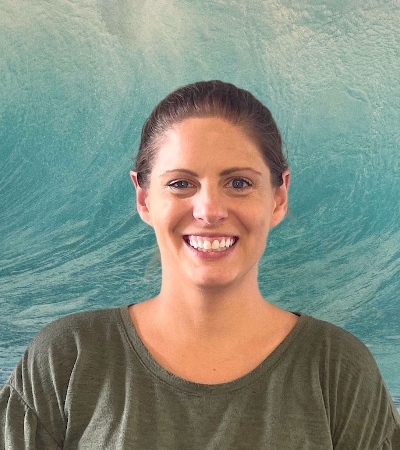
Kathleen Euldji
PT, DPT Physical Therapist

Jen Rosenzweig
PTA Physical Therapist

Christopher Johnson
PT, DPT Physical Therapist

Cole Racich
PT, DPT, OCS Physical Therapist, per diem
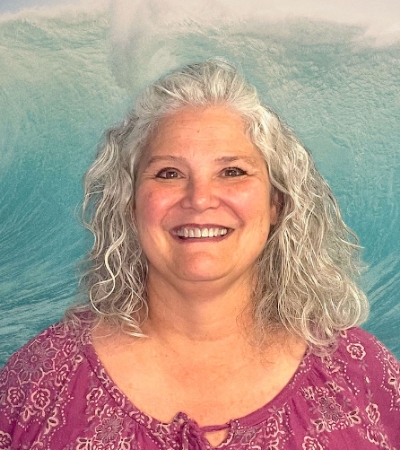
Maureen Donohoe
PT, DPT, PCS Physical Therapist, per diem

Helena Esmonde
PT, DPT Physical/Vestibular Therapist
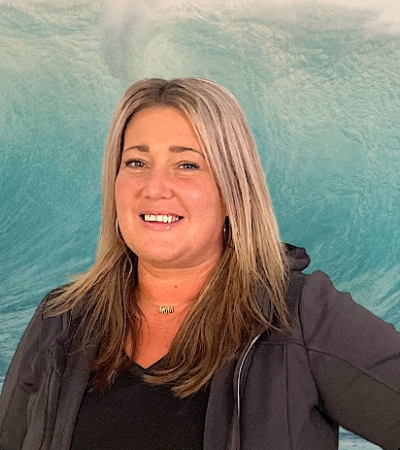
Julie Jorgensen
Office Manager

Brianna Whitton
Patient Care Coordinator & Marketing Specialist

Jackleyn Hughes
Physical Therapy Aide
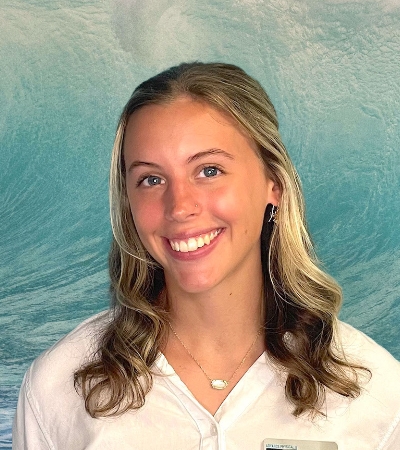
Madison Vinrovski
Physical Therapy Aide