Health Blog
PHYSICAL THERAPY & BACK PAIN: PART II

In an earlier blog post we discussed the onset of Degenerative Disc Disease (DDD) and how it limits our daily function. Today we will feature common interventions used in physical therapy to address these limitations.
How can Physical Therapy treat DDD?
The following is taken from the American Physical Therapy Association (APTA) to shine light on commonly used Physical Therapy programs:1
- Stretching and flexibility exercises to improve mobility in the joints and muscles of your spine and your extremities—improving motion in a joint is often the key to pain relief
- Strengthening exercises—strong trunk muscles provide support for your spinal joints, and strong arm and leg muscles help take some of the workload off your spinal joints
- Aerobic exercise, which has been shown to be helpful in relieving pain, promoting a healthy body weight, and improving overall strength and mobility—all important factors in managing DDD
- Manual Therapy techniques provided directly by physical therapist’s hands to improve joint mobility and decrease pain
- Aquatic activities to decrease compressive forces and maintain cardiovascular endurance and strength.
PHYSICAL THERAPY & BACK PAIN: PART ONE

Over 75% of Americans experience some form of low back pain in their lifetime, with many become overwhelmed with various medical terms and treatment options. Here is some information to assist with understanding how medical professionals and patients handle back pain.
What is Degenerative Disc Disease (DDD)?
DDD is a type of osteoarthritis and a typical part of the natural aging process which can be a primary source of back pain in a lot of our patients.
Read full blogStretching 101: Frequently Asked Questions about Stretching for Physical Therapy

Hip flexor stretch
Everyone that’s ever been to PT is familiar with some form of stretching. Today’s blog is here to dispel some myths associated with stretching and address a lot of the questions we receive in our Physical Therapy clinic concerning the need to stretch. Enjoy!
- What is stretching and why do I need it? In a nutshell, stretching is the act of lengthening a muscle (to be technical, it’s the “muscle tendon unit” that lengthens). It is a way of improving flexibility.
New Year’s Resolutions: Safe Running Progression

Whether 2015 is the year you train for your first 5k Charity Fun Run, a military-inspired Mud Run, the Broad Street Run, or your fourth marathon, establishing a safe and effective running program is crucial to avoiding common over-use injuries associated with running. Here we will briefly discuss a few cornerstones of proper running programming.
The “10% Rule”
Keeping in mind that safety and injury prevention is our main concern, the “10% rule” is the best place to start when designing a running program.
Read full blogWhy Technology is becoming a Pain in your Neck.
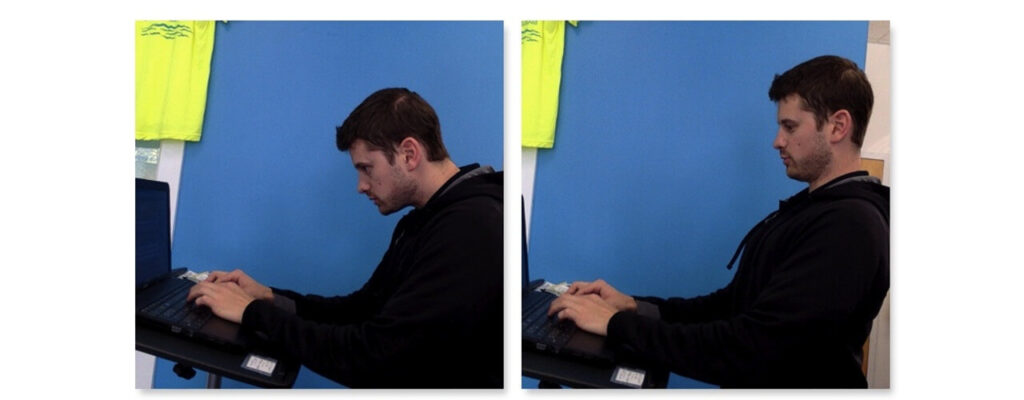
I Have NECK Pain and I don’t know why?
Stop. Before you read any further, I want you to take an honest assessment of your posture. If you are anything like 90% of the subjects in a recent study1 you are reading this with a forward flexed posture: shoulders rounded, neck protruding forward, and back slouched. Congratulations, you have awful posture. Now let’s fix it!
First, why is this a problem?
Read full blogThe Healing Powers of Sleep

As Physical Therapists, we focus a lot on what patients do during their waking hours (hydration, physical activity, proper body mechanics, etc). However, it is just as important to look at what we do at night in order to speed up the healing and recovery process. Sleep is a key ingredient in speeding the recovery process after injury as well as maintaining a healthy lifestyle. Here are some tips to help improve the quality (and quantity) of your sleeping patterns:
Consistency :
Set a goal to go to bed and wake around the same times each day.
Read full blog7 Myths About Physical Therapy

People everywhere are experiencing the transformative effect physical therapy can have on their daily lives. In fact, as experts in the way the body moves, physical therapists help people of all ages and abilities reduce pain, improve or restore mobility, and stay active and fit throughout life. But there are some common misconceptions that often discourage people from visiting a physical therapist.
It’s time to debunk 7 common myths about physical therapy:
1.
Read full blogDo you have Achilles Pain? Eccentric Strengthening can help

The soleus, gastrocnemius, and plantaris muscles form a common tendon, the Achilles tendon, which attaches medially to the posterior surface of the calcaneus.
Achilles Tendinitis and Tendinosis
Achilles tendinitis develops due to inflammation, strain, or repetitive trauma to the Achilles tendon. This occurs usually due to a repetitive activity. Symptoms are also associated with recreational activities like running, tennis and basketball.
If this is left untreated, it can develop into Achilles tendinosis, due to a degenerative change in the tendon from repetitive microtrauma.
Read full blogWhy you should get a Functional Movement Screen

If you are looking to embark on a new fitness goal or begin a sport as the weather is warming up seeking out a Physical Therapist to put you through a Functional Movement Screen™.
The Functional Movement Screen™ or FMS™ for short was developed by Gray Cook, Lee Burton, and colleagues as they combined innovation with science and evidenced-based research to create a standardized ranking and grading system that effectively and efficiently documents movement patterns critical to normal function.
Read full blogNeck Pain + Radicular Pain

Neck pain is one of the leading causes of disability. In fact, it’s estimated that 10% of the population will be affected by neck pain each year. In some instances neck pain can also be accompanied with pain in the shoulder or even down to a person’s hand. In these cases not only is the pain experienced disabling it can also be frightening to a person that they may have developed a serious medical condition. Fortunately, this is the not the case for the vast majority of individuals. Usually the culprit behind neck pain that radiates down the arm is from a cervical radiculopathy.
Read full blog